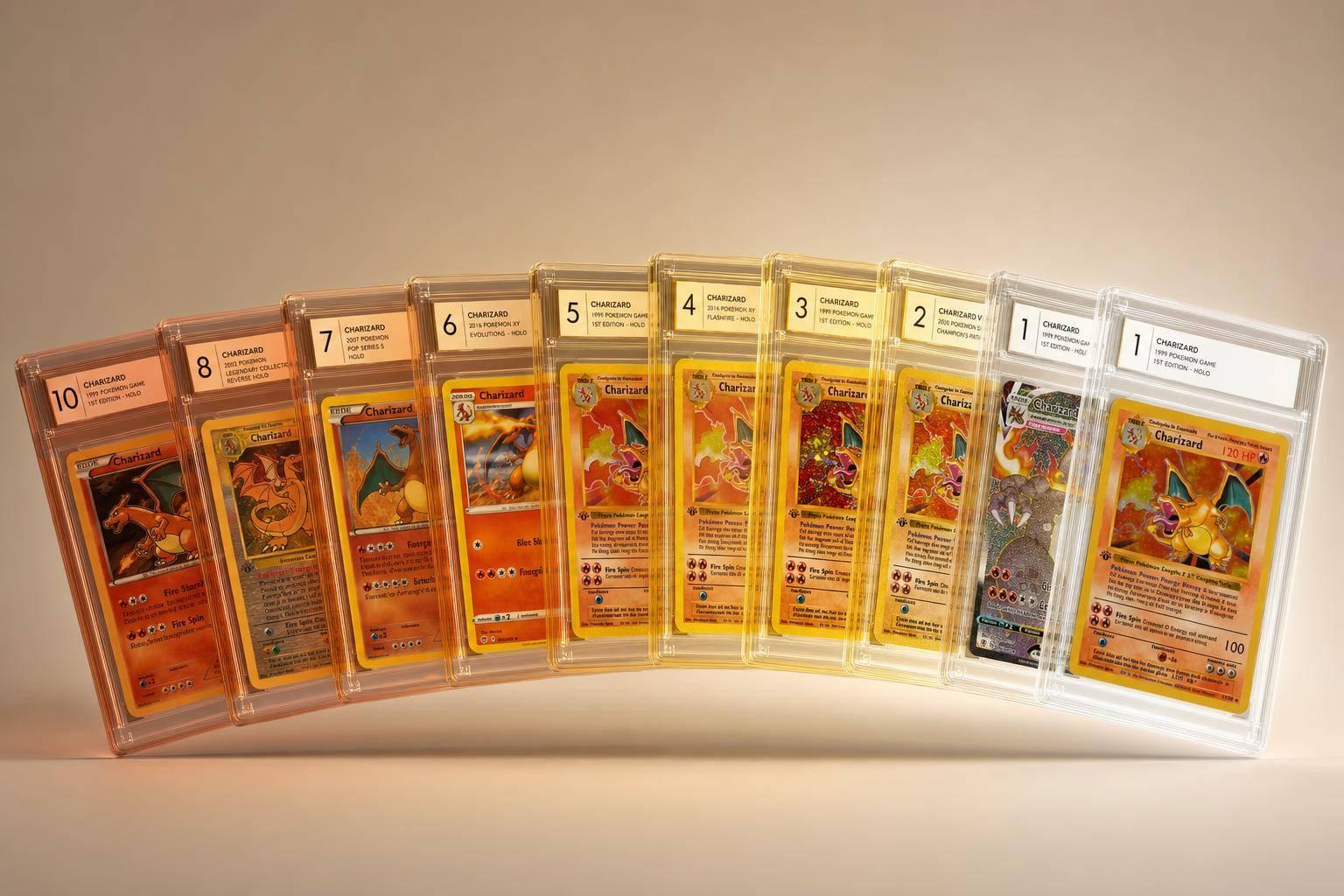
A card is rare for one of two reasons: few copies exist or one version is meaningfully different. That’s the whole idea.
If I want to avoid overpaying, I keep my focus on a short checklist:
- Print run: Was it made in small numbers, like /25 or 1/1?
- Variation: Is it a separate version with a different stamp, art, text, or release method?
- Supply vs. label: A card can say Rare and still be easy to find.
- Pack odds: A “case hit” can still have thousands of copies if the product run was large.
- Parallel overload: One release had 350+ different 1-of-1s, which shows how fast “rare” can get watered down.
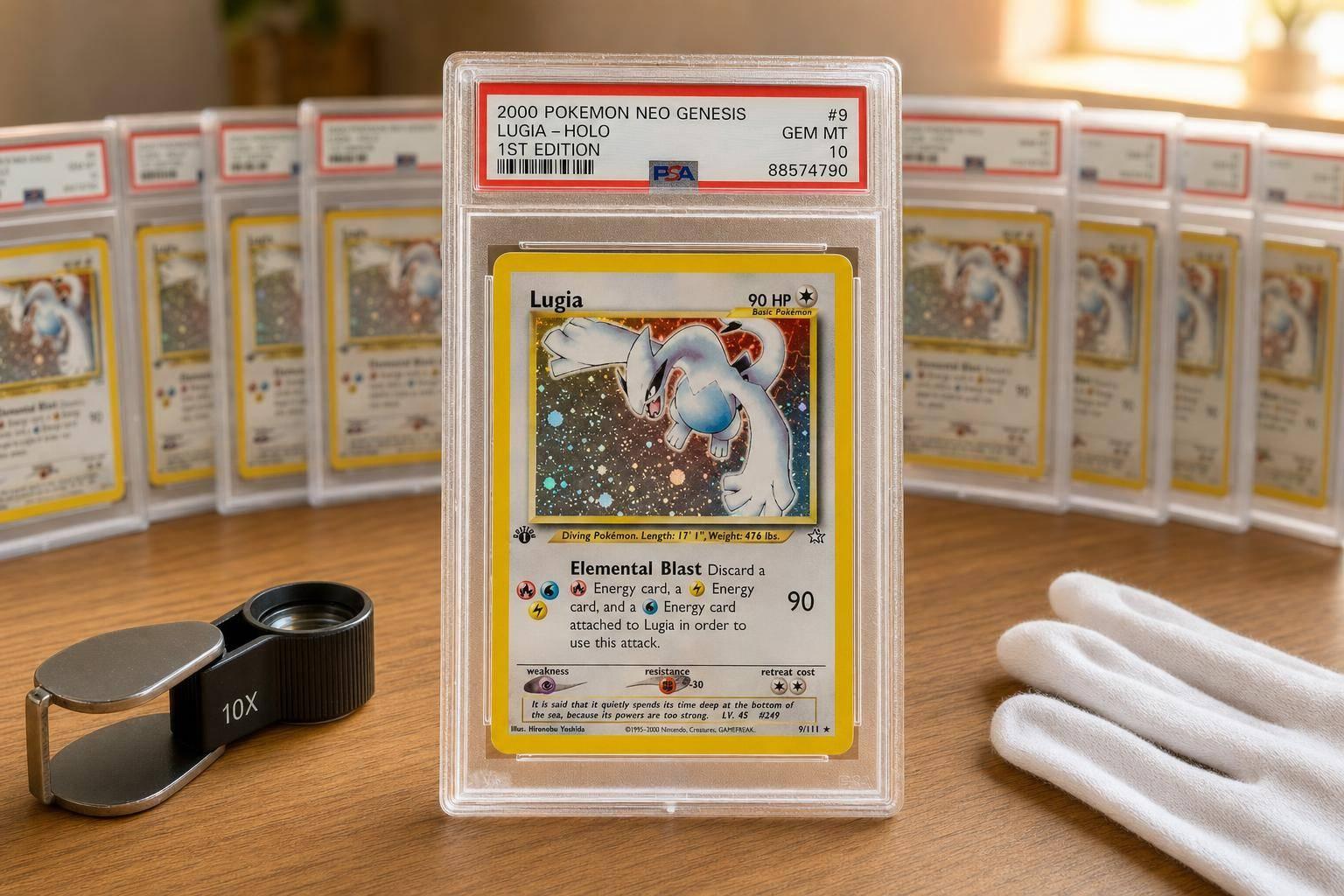
- Grade scarcity: Some older cards are not hard to find raw, but high-grade copies are much tougher.
- Proof before price: I check the card code, set symbol, checklist entry, sold listings, and pop reports before I spend money.
Here’s the short version: rarity is about supply, not hype. A numbered card, foil finish, or high asking price does not prove much by itself. What matters is how many copies were printed, how the version differs, and whether the market data backs it up.
If I’m buying, I treat rarity like a fact-checking job: identify the exact version, confirm how it was issued, then compare sold prices and graded populations.
How to Tell if Your Trading Cards are Rare and Expensive
sbb-itb-905f8ad
Problem: Pack odds, rarity labels, and hype do not always mean a card is scarce
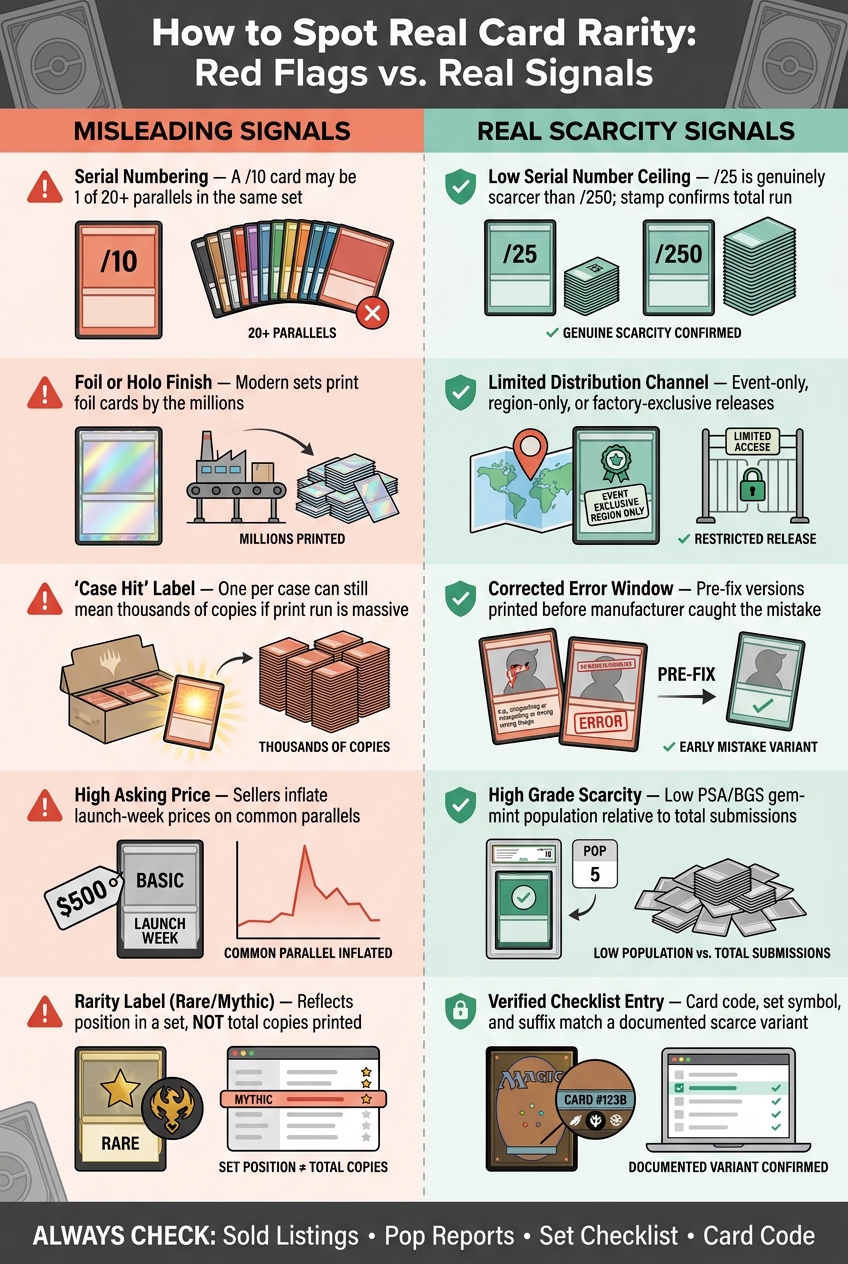
How to Spot Real Card Rarity: Red Flags vs. Real Signals
Rarity labels tell you where a card sits inside a set. They do not tell you how many copies exist overall. A card marked "Rare" or "Mythic Rare" can be easier to find than an older common from a much smaller print run.
Why a common card can feel rare at first
When a set first drops, a card can seem hard to find simply because not much product has been opened yet. That feeling doesn’t last long. As more boxes get ripped, more copies show up, and the market starts to look very different. Hyped short prints can drop hard once the full supply becomes clear.
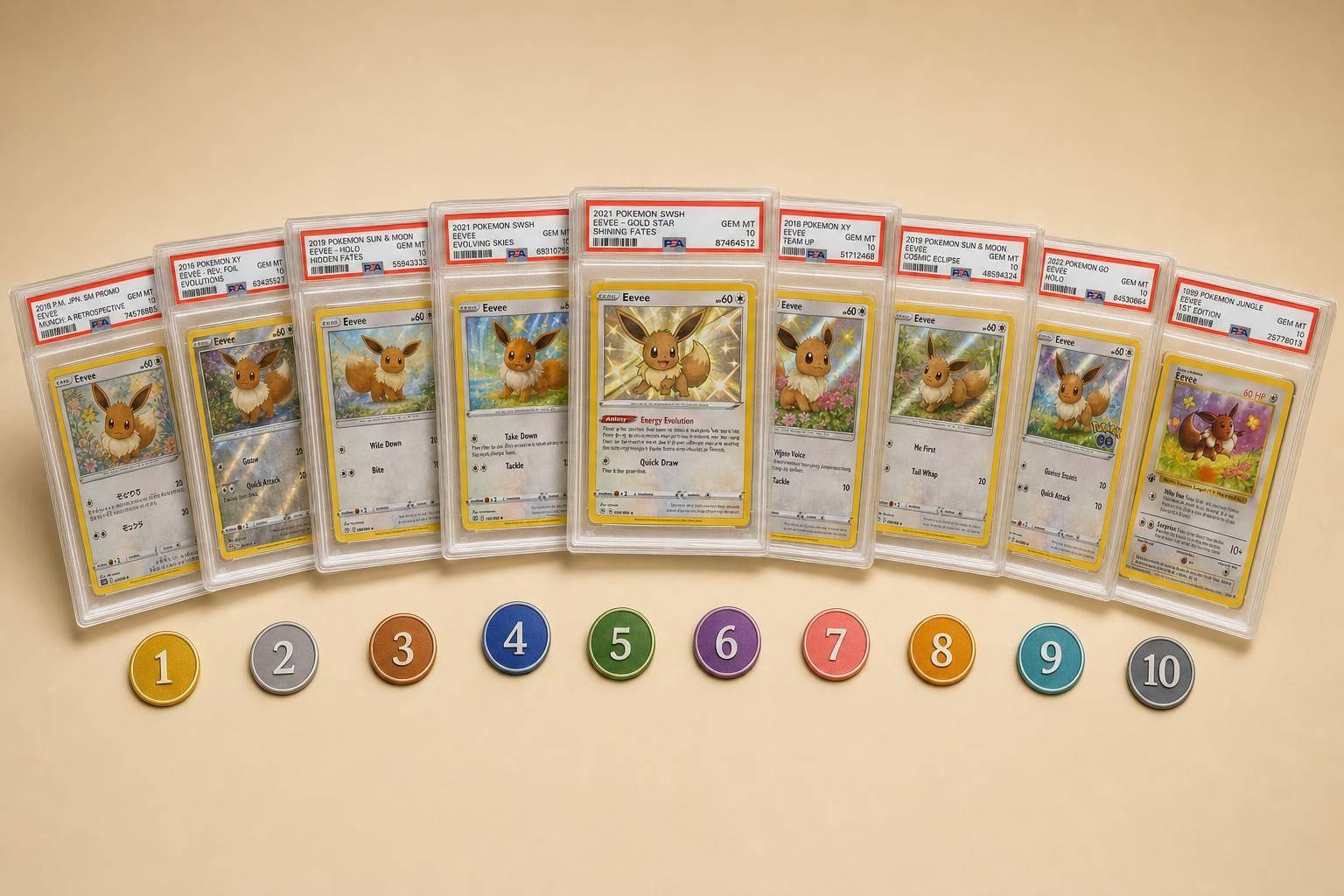
Modern parallels add another layer to this. A card numbered to /10 might sound scarce on its own. But if that same card has 25 parallel versions, you could be looking at 250 "rare" versions of one card across the market. So yes, a card can be numbered and still not be all that scarce if the set stacks too many parallel tiers on top of each other.
What overpaying usually looks like
The mistake people make most often is simple: they pay extra for a card that looks exclusive but was printed at scale.
Here’s a quick way to sanity-check the usual red flags:
| Warning Sign | Why It's Misleading | Real-World Check |
|---|---|---|
| Serial numbering | A /10 card may be one of 20+ different parallels | Check the full set checklist for the total number of parallel tiers |
| Foil or holo finish | Modern sets use heavy foil on cards printed by the millions | Compare population report data to raw availability |
| "Case hit" label | "One per case" can still mean thousands of copies if the print run is massive | Estimate total print run from pack odds and box counts |
| High asking price | Sellers can list common parallels at inflated launch-week prices | Check sold listings to see market value |
One rule saves a lot of money: use sold listings, not asking prices.
Once you strip out the hype, the question is pretty plain: how many copies were printed?
How low print runs create real scarcity
Once you strip away the hype, the next step is pretty simple: how many copies were made? Low print runs are one of the clearest signs of rarity, because there were fewer copies in the first place. And with vintage cards, the story gets even tighter. High-grade survivors matter just as much, since gem-mint copies tend to exist in much smaller numbers.
Short prints, limited parallels, and serial-numbered cards
Scarcity usually shows up in one of two ways: either the card tells you the count outright, or the count is buried in the set’s pull rate.
Serial-numbered cards are the easiest to read. If a card is stamped 077/250, that tells you the full print run for that version. A card numbered to /25 is harder to find than one numbered to /250. Pretty direct.
Short prints (SP) and super short prints (SSP) work differently. They don’t usually show a printed total, so you have to trace the count through low insertion rates. In practice, that means checking pack odds against a verified set checklist.
For older cards, grade scarcity can matter just as much as the original print run. A card might not be all that scarce in raw form, but gem-mint copies can be a different story. That gap is a big reason condition can swing prices so hard, even when the total number of copies isn’t especially low.
First edition, unlimited, and release-channel limits
Not all scarcity comes from pack odds. Sometimes the limit comes from how a card was released and where it was sold. In other words, distribution channel can cap supply just as tightly as print run.
Serial-numbered cards are usually the easiest to confirm. Event-only and region-only cards take a bit more work, and that’s where a checklist becomes important.
| Distribution Type | Scarcity Driver | Example |
|---|---|---|
| Initial print run | First production batch before unlimited reprints | First-edition stamp |
| Event-limited release | Limited to one event in one country | 1998 Pikachu Illustrator (39 copies) |
| Factory-only release | Not seeded in booster packs | Factory-set exclusive release |
| Region-limited release | Local market only; global demand outpaces supply | Japan-only Pokémon promos |
| Fixed quantity on card | Hard-coded quantity stamped on the card | MTG Lord of the Rings Sol Ring, limited to 900 copies |
How variations and corrected versions become collectible
Low print runs are only part of the story. The other driver is meaningful variation: a trackable difference in a card’s stamp, text, artwork, or corrected print state that gives it its own collectible identity, even when the card name stays the same.
Put simply, a variation becomes a separate collectible version when it changes the stamp, art, text, or release format.
Stamped cards, alternate versions, and promo-only releases
Promo-only releases can be scarce when distribution is limited to events, judges, or bundled products. Alternate artwork, borderless frames, and insert variants can work the same way. They aren’t just cosmetic tweaks. They’re separate production versions.
That said, scarcity changes from set to set, so it’s smart to check the checklist before paying a premium. The clearest examples are stamped issues, promo releases, and corrected prints.
Corrected vs. uncorrected text or artwork
When a manufacturer fixes an error in the middle of a print run, the pre-correction version is usually scarcer because fewer copies were made before the fix. That’s where the difference matters.
If the mistake shows up on every copy, though, it’s just a flaw, not a scarce variant. That distinction trips people up all the time.
Some variation types are simple to verify at a glance. Others take more work and need a checklist plus a code match.
Which variation types usually matter most
The table below breaks down the most common variation types by how scarcity is created and how easy each is to verify.
| Variation Type | How Scarcity Is Created | Verification Ease |
|---|---|---|
| Stamped 1st Editions | Limited to the initial production run | Easy - visible stamp on card |
| Corrected Errors | Mistake caught mid-print; error window is small | Hard - requires comparing both versions |
| Uncorrected Errors | Mistake exists on all copies; no scarcity created | Easy - database check |
| Promos | Limited distribution via events or specific products | Easy - set symbols/stamps |
| Regional Exclusives | Geographic limits on distribution | Moderate - language/back check |
Stamped first editions and regional exclusives usually hold up best. Why? The difference is easier to document, or the distribution was plainly narrow.
Uncorrected errors deserve the most skepticism. They’re flaws, not scarce variants.
Once you identify the variation, confirm it in a checklist or database before you buy. Then match the card code, checklist entry, and population data to confirm which version you have.
How to verify rarity before you buy
Start with checklist books, set databases, and card codes
Once you know the card’s scarcity type, the next step is simple: verify the exact version before you buy.
Start with the card number, the set or expansion symbol, and any suffixes like “a” or “b” that point to alternate versions. If you’re dealing with older cards that don’t have clear rarity markers, use a trusted set database to confirm the exact issue and any known variants. Figure out the exact version before you even think about price.
Then check whether the physical card matches the checklist entry. Look at the front, but don’t stop there. Check the back too. Stamps and copyright changes can separate one version from another, and that tiny detail can be the line between a common reprint and a scarcer original.
Use population reports, but know what they do not tell you
Once the card is identified, grading data can help you judge condition scarcity.
PSA, BGS, and CGC population reports show how many copies were submitted and graded at each level. That’s useful for understanding condition scarcity, but it does not tell you the total print run.
What matters most is the grade ratio, not just the raw total. A card can have a high total population and still be tough in gem-mint condition. That points to condition scarcity, not actual print scarcity.
On newer releases, a low population can also be misleading. Sometimes it just means the card hasn’t been graded much yet.
Conclusion: Small production details are what make a card worth chasing
Not every parallel deserves a premium. And not every error is a scarce variant.
Check the code, match it to the checklist, then read the pop ratio before you pay.
FAQs
How can I estimate rarity without a published print run?
If a print run isn't published, estimate rarity by looking at population reports, market activity, and production clues.
Check how many graded copies exist, how often the card shows up for sale, and how fast it moves. Then use set databases or expert checklists to figure out whether it's a short print, a regional exclusive, or a lower-inserted parallel.
Does a low PSA pop always mean a card is rare?
No. A low PSA population count does not always mean a card is inherently rare.
Plenty of cards never get graded at all. So a low pop can simply reflect collector interest, grading fees, or whether people think the card is worth sending in, not how many copies are out there in total.
Population counts can also change over time as more cards get submitted. That means a card with a low pop today may not stay that way.
At the end of the day, a low pop usually points to scarcity among graded copies, especially in high grades, not automatic rarity of the card itself.
Which card variations deserve a premium?
Variations often earn a premium when actual print differences or the card’s history make them harder to find. That usually means things like distinct alternate artwork, first-edition stamps, verified early printings, and meaningful errors or corrected versions - if collectors want them.
Regional exclusives, limited promo releases, and high-grade copies of older common cards can also sell for more. But don’t lean on rarity symbols or marketing buzz alone. Check set databases and population reports first.