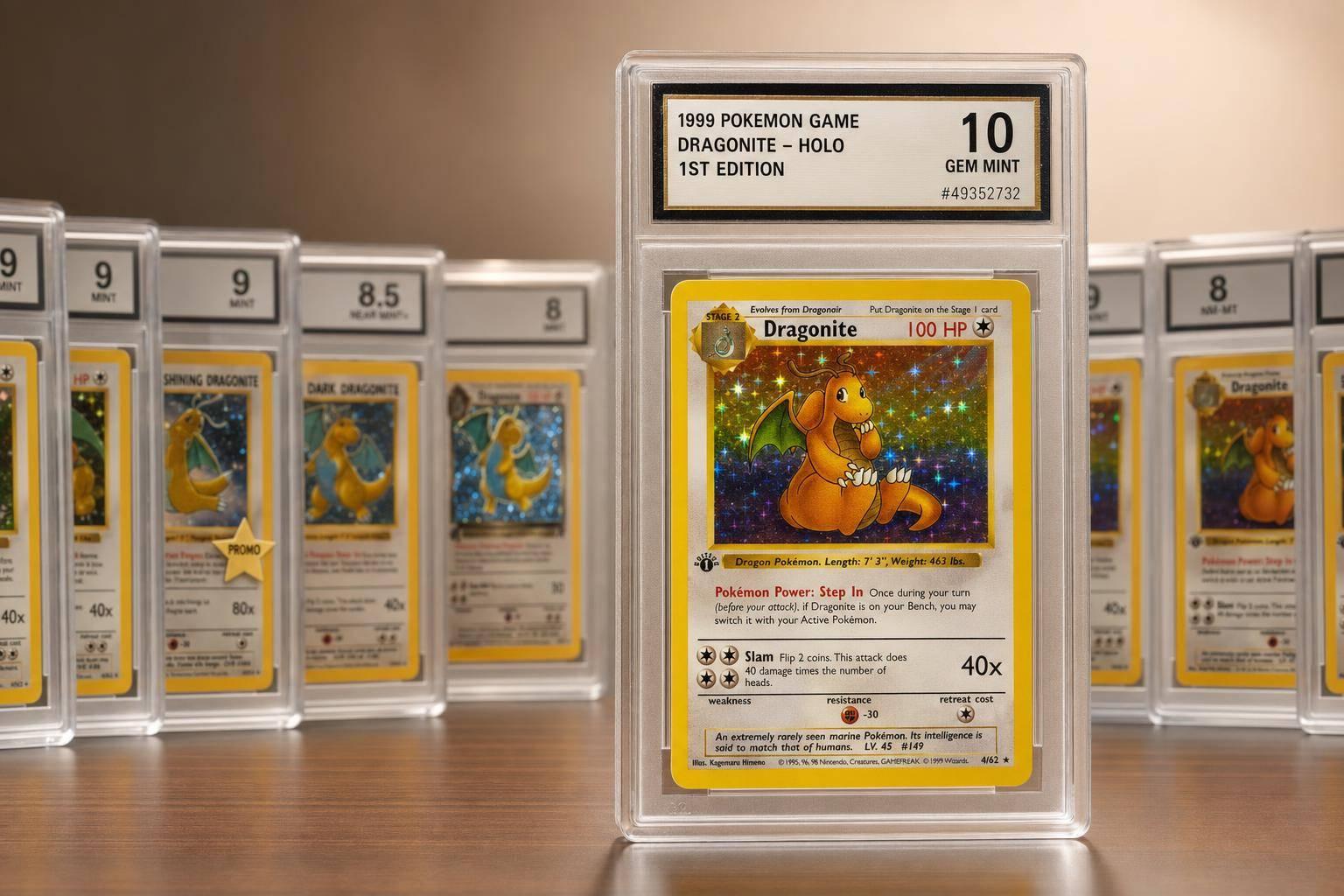
If you own a Charizard, the print version and grade can change the price from a few hundred dollars to more than $900,000.
I’d sum up the market like this: the cards at the top are mostly early Base Set prints, a few late Wizards of the Coast grails, one EX-era chase card, and two modern standouts. The biggest price gaps come from three things: 1st Edition vs. non-1st Edition, Shadowless vs. Unlimited, and PSA 10 vs. lower grades.
Here’s the short version:
- #1 is still the 1999 1st Edition Shadowless Base Set Charizard #4/102
- A public sale hit $954,800 in February 2026
- Early Base Set copies can swing by $10,000s or $100,000s from one grade step
- Modern Charizards can still sell well, but grade gaps are usually much smaller
- If you found an old binder, check the stamp, shadow, copyright line, set, and card number before doing anything else
The 10 cards covered are:
- 1999 Base Set 1st Edition Shadowless Charizard #4/102
- 1999 Base Set Shadowless Charizard #4/102
- 2003 Skyridge Crystal Charizard #H19/H32
- 2006 EX Dragon Frontiers Gold Star Charizard #100/101
- 2002 Neo Destiny Shining Charizard #107/105
- 2000 Gym Challenge 1st Edition Blaine’s Charizard #2/132
- 2000 Team Rocket 1st Edition Dark Charizard Holo #4/82
- 1999 Base Set Unlimited Charizard #4/102
- 2017 Burning Shadows Rainbow Rare Charizard-GX #150/147
- 2023 Scarlet & Violet 151 Charizard ex SIR #199/165
Top 10 Expensive Charizard Pokémon Cards!
sbb-itb-905f8ad
Quick Comparison
| Card | Year | What to check first | Top end in the article |
|---|---|---|---|
| 1st Edition Shadowless Base Set | 1999 | 1st Edition stamp + no shadow | $954,800 sale / $300,000–$550,000+ PSA 10 |
| Shadowless Base Set | 1999 | No stamp + no shadow | $25,000–$60,000 PSA 10 |
| Skyridge Crystal Charizard | 2003 | H19/H32 and Crystal card style | $15,000–$25,000 PSA 10 |
| Gold Star Charizard | 2006 | Gold star next to name, #100/101 | $45,000–$100,000+ PSA 10 |
| Shining Charizard | 2002 | #107/105, Shining foil style | $8,000–$15,000 PSA 10 |
| Blaine’s Charizard | 2000 | Gym Challenge, 1st Edition | $2,500–$4,500 PSA 10 |
| Dark Charizard Holo | 2000 | #4/82 holo vs. #21/82 non-holo | $1,500–$3,000 PSA 10 |
| Base Set Unlimited | 1999 | Drop shadow + 1999–2000 line | $4,000–$20,000 PSA 10 |
| Rainbow Rare Charizard-GX | 2017 | #150/147 and rainbow texture | $450–$800 PSA 10 |
| Charizard ex SIR (151) | 2023 | #199/165 and textured full art | $400–$1,500 PSA 10 |
My main takeaway: don’t price a Charizard by name alone. Two cards that look almost the same can be separated by a huge dollar gap. If you’re buying, selling, or grading, start with the exact version, then check the grade spread, and only then look at sold prices.
Why Some Charizards Sell for Five and Six Figures
Four things push Charizard into the five- and six-figure range: set prestige, scarcity, grade population, and nostalgia.
Era and print window matter a lot. The 1999 Base Set was the starting point for the Pokémon TCG, and that alone gives it a level of value that later reprints can’t match. 1st Edition cards came from a short print run before Unlimited, so they’re much harder to find than later copies. Shadowless cards, which don’t have the drop shadow behind the art box, are also scarcer than Unlimited versions. Skyridge sits in its own lane too, thanks to Crystal cards from one of the last e-Reader sets.
Condition is where prices jump fast. Only 122 to 125 PSA 10 1st Edition Base Set Charizards exist across all submissions, and that tiny supply is a big reason six-figure sales happen. On that card, moving from PSA 9 to PSA 10 can mean an extra $300,000+. Modern cards usually don’t work like that. In many cases, a PSA 10 is only worth about 2 to 3 times the raw price. At the same time, adults who grew up with Pokémon still fuel strong demand.
You can see those gaps clearly in the Base Set variants here:
| Variant | Raw (Near Mint) | PSA 9 (Mint) | PSA 10 (Gem Mint) |
|---|---|---|---|
| 1st Edition Base Set (Shadowless) | $3,000–$8,000 | $75,000–$120,000 | $300,000–$550,000+ |
| Shadowless Base Set (Non-1st Ed) | $925–$4,000 | $12,000–$18,000 | $25,000–$60,000 |
| Unlimited Base Set | $200–$500 | $1,000–$3,500 | $4,000–$20,000 |
| Gold Star (EX Dragon Frontiers) | $1,500–$5,300 | $8,000–$15,000 | $25,000–$75,000 |
The gap isn’t subtle. A small print detail can change the value by tens of thousands of dollars, and sometimes much more.
The 1st Edition stamp and the missing drop shadow are the main markers that separate the top early Base Set Charizards from Unlimited copies. That’s why the ranking below focuses on exact print variants, not just the Charizard name.
Off Center Reader Note: How to Use This List If You Just Found Your Old Binder
If you just found an old binder, use this list to figure out the exact Charizard version you have. Most people coming back to the hobby know the name, but not the print version. And that print version is what drives the price.
So treat this as a version guide, not a price quote. Each entry below points to the exact set, print variant, and card number so you can match your card to the version ranked here.
For Base Set copies, check three markers:
- The 1st Edition stamp
- The shadowless art box
- The copyright line
Look for the 1st Edition stamp on the left side below the artwork frame. Then check behind the art box for a drop shadow. Shadowless cards do not have one. Last, read the copyright line. On 1st Edition and Shadowless cards, it usually includes "99".
Once you know how to spot those three markers, the rankings below get a lot easier to follow.
This list reflects graded market values. Raw cards sell for less than graded copies, and condition is usually the big reason why.
For 1st Edition and Shadowless copies, grading can still make sense even at PSA 8. For Unlimited Base Set copies, it usually makes sense to grade only cards that look like clear PSA 9 or PSA 10 candidates.
With that in mind, the list below ranks the exact Charizard versions that command the highest prices.
1. 1999 Pokémon Base Set 1st Edition Shadowless Charizard Holo #4/102
This card sits at the top of the market for a pretty simple reason: it pairs first-print status with a very small number of top-grade copies. It came out in a short first-print run in early 1999, and only about 122 to 125 copies have ever received a PSA 10 Gem Mint grade. That mix of first-print status and low PSA 10 population is what sets it apart from every later Base Set version.
In February 2026, a PSA 10 copy with Logan Paul provenance sold for $954,800 at Goldin Auctions. And that sale helps show how wide the gap can get between grades.
| Grade | Current U.S. Market Range |
|---|---|
| PSA 10 (Gem Mint) | $300,000 – $550,000+ |
| PSA 9 (Mint) | $35,000 – $120,000 |
| PSA 8 (NM-Mint) | $18,000 – $25,000 |
| Raw (Near Mint) | $3,000 – $30,000 |
| Raw (Played/Damaged) | $1,500 – $4,000 |
The jump from PSA 9 to PSA 10 is huge. PSA 10 prices can sell for 6x to 10x more than PSA 9 because Gem Mint supply is so small. Put bluntly, top-end buyers pay a steep premium for condition certainty. That’s also why grading matters so much here: it helps with liquidity because buyers want both authentication and a clear condition standard.
To spot a genuine copy, check for these markers:
- 1st Edition stamp
- Shadowless frame
- 1999 copyright line
If even one of those markers is missing, you’re looking at a different card - and a very different market.
2. 1999 Pokémon Base Set Shadowless Charizard Holo #4/102
If 1st Edition is out of reach, Shadowless is the next true Base Set grail. It’s the first non-1st Edition Base Set Charizard, and after the 1st Edition card, it’s the highest-value version.
Here’s the quick way to spot it: there’s no 1st Edition stamp and no drop shadow behind the art box. The copyright line reads "1995, 96, 98, 99". Those two details matter a lot. They’re the easiest way to tell Shadowless apart from Unlimited before you buy or sell.
Shadowless stays expensive for a simple reason: it’s the first big step down from 1st Edition, but it’s still much harder to find than Unlimited. And once grades get higher, the price gap gets steep fast.
| Grade / Condition | U.S. Market Range |
|---|---|
| Raw (Near Mint) | $925 – $4,000 |
| PSA 9 (Mint) | $5,000 – $18,000 |
| PSA 10 (Gem Mint) | $25,000 – $60,000 |
PSA 10 copies currently trade between $25,000 and $60,000, while PSA 9 copies usually land between $5,000 and $18,000. That jump of just one grade point can mean a 5x to 6x price swing. That’s a huge spread, and it’s a big part of why Shadowless sits so high in the vintage market.
3. 2003 Pokémon Skyridge Crystal Charizard Holo #H19/H32
After the early WotC grails, Skyridge sits in the next big scarcity tier. The Skyridge Crystal Charizard comes from the final Wizards of the Coast Pokémon set, and that alone gives it extra weight with collectors.
What makes this card stand out is its Crystal Type Poké-Body and those e-Reader borders. It’s one of the most recognizable late-era Charizards. The holographic version is numbered #H19/H32, which marks it as a secret rare in Skyridge. It still requires multiple Energy types to attack, but for most buyers, the main draw is the look and the rarity.
Condition is a big deal here. The wide borders and foil surface tend to show edge wear, silvering, print lines, and scratches fast. That means sharp copies are tough to keep that way, and Gem Mint examples are much harder to find.
| Grade / Condition | U.S. Market Range |
|---|---|
| Raw (Near Mint) | $1,500 – $2,500 |
| PSA 10 (Gem Mint) | $15,000 – $25,000 |
| Highest Documented Sale | $40,800 (PSA 10, 2022) |
A PSA 10 copy sold for $40,800 in 2022, while current top-grade copies usually trade in the $15,000 to $25,000 range.
4. 2006 Pokémon EX Dragon Frontiers Gold Star Charizard ★ #100/101
After the late-WOTC grails, the EX era gave collectors the next big Charizard to chase. The 2006 EX Dragon Frontiers Gold Star Charizard stands out as one of the top EX-era Charizards and the first modern-style grail in this lineup. It’s card #100/101, marked with a gold star, and it features Dark-type Charizard art that breaks past the frame.
Gold Star cards were famously hard to pull. The odds were about 1 in 72 packs for any Gold Star card, not Charizard in particular. That scarcity matters. By 2026, PSA 10 copies had pushed into the six-figure range.
| Grade / Condition | U.S. Market Range (Mid-2026) |
|---|---|
| Raw (Ungraded) | $1,800 – $5,300 |
| PSA 7 (Near Mint) | ~$28,000 (June 2026 sale) |
| PSA 9 (Mint) | $8,000 – $15,000 |
| PSA 10 (Gem Mint) | $45,000 – $100,000+ |
One PSA 10 sold for $60,065.85 in October 2020. And the jump from PSA 9 to PSA 10 can be huge here. Some estimates put the PSA 10 premium at about 5x to 6x over a PSA 9.
If you have a clean copy, grading it before selling makes a lot of sense. With a card like this, tiny flaws can mean a massive price swing. That same grade sensitivity matters even more on the next vintage-era Charizard.
5. 2002 Pokémon Neo Destiny Shining Charizard #107/105
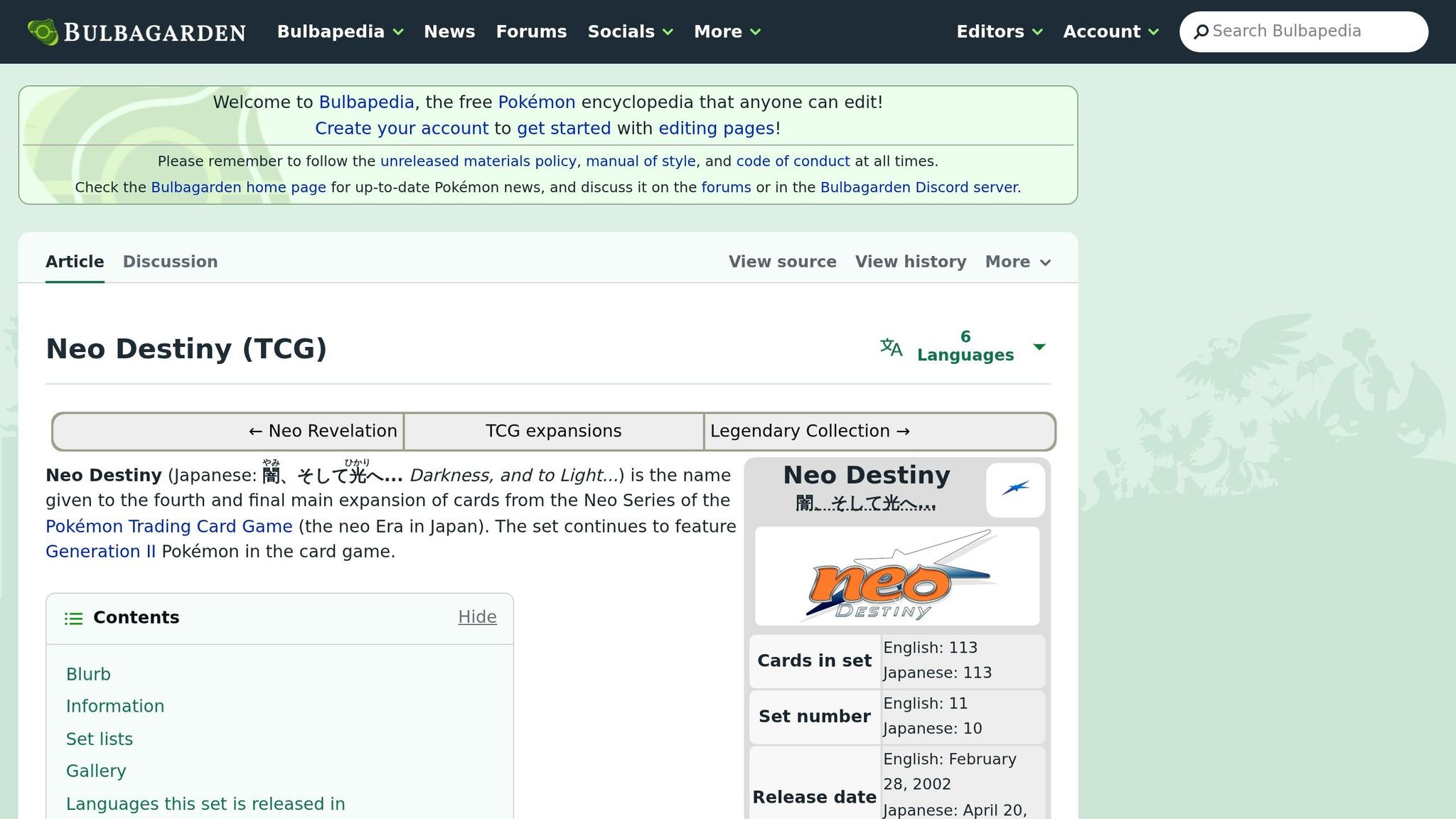
After the EX-era Gold Star chase cards, the list swings back to late WotC vintage. Neo Destiny Shining Charizard is a Secret Rare numbered #107/105, which puts it outside the main set list. It lands this high for a simple reason: Secret Rare status, tough grading, and strong 1st Edition demand all hit at once.
The card’s Shining foil appears on Charizard itself, not the background. That detail makes grading harder than it is on standard holos, so Gem Mint copies are tough to come by.
Released in 2002, Neo Destiny was the last Neo-era Wizards of the Coast set. For collectors who missed opening Neo-era packs as kids, this is one of the clearest late-WotC Charizard grails.
| Grade / Condition | U.S. Market Range (Mid-2026) |
|---|---|
| Raw (Near Mint) | $500 – $3,999 |
| PSA 10 (Gem Mint) | $8,000 – $15,000 |
| 1st Edition (Peak Sale) | ~$47,500 |
1st Edition copies carry a steep premium. They’ve reached about $47,500, while standard PSA 10 copies usually sit in the $8,000–$15,000 range. That gap between print and grade is exactly why Neo Destiny can be so tricky to price.
Next up is a Gym-era Charizard that swaps Secret Rare scarcity for a different kind of vintage pull.
6. 2000 Pokémon Gym Challenge 1st Edition Blaine's Charizard Holo #2/132
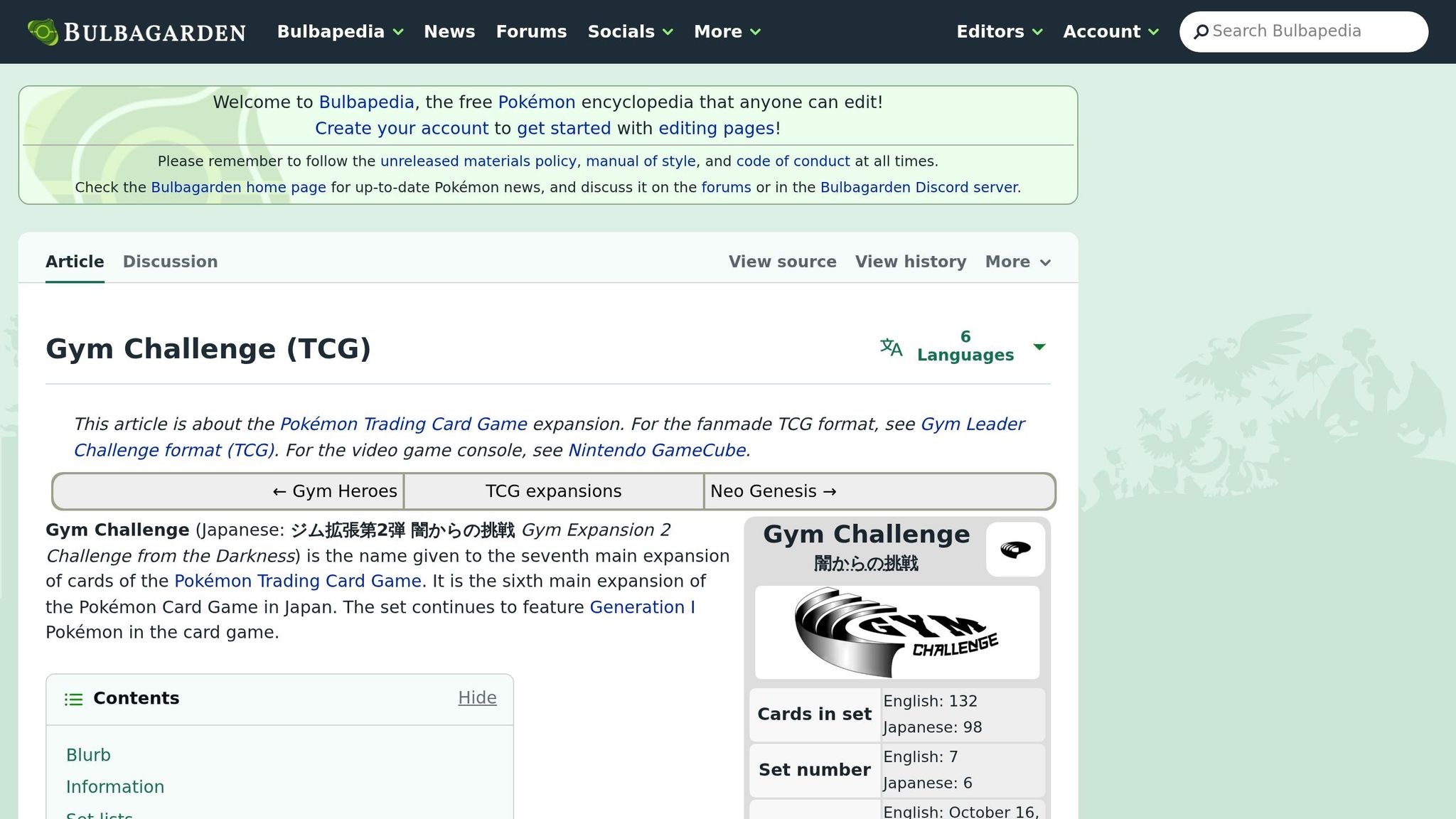
After Neo Destiny, the next vintage tier is the Gym-era Charizard.
Gym Challenge stands out because of its Owner's Pokémon theme, and Blaine's Charizard fits neatly into that lane. It has its own collector appeal. But when it comes to price, the 1st Edition stamp does most of the heavy lifting.
Unlimited copies trade raw for around $500. By comparison, 1st Edition copies sell for about $2,500 to $4,500 in PSA 10.
For returning collectors, the takeaway is pretty simple: 1st Edition Blaine's Charizard is the one to target.
Finding Gem Mint copies isn't easy. Like many late-WotC holos, this card often shows silvering along the edges and print lines. And that matters, because either issue can stop a card from getting a PSA 10.
| Grade / Condition | Approx. 2026 Market Value |
|---|---|
| Unlimited raw | ~$500 |
| PSA 10 (Gem Mint) | $2,500–$4,500 |
It's one of the less expensive late-WotC Charizards, but in 1st Edition, it's still a clear premium card.
Next comes another 1st Edition WotC Charizard, this time from Team Rocket instead of the Gym sets.
7. 2000 Pokémon Team Rocket 1st Edition Dark Charizard Holo #4/82
After Blaine's Charizard, Team Rocket keeps the WotC-era streak going with another 1st Edition holo. Dark Charizard #4/82 is the card collectors usually chase from this set. That number matters: #4/82 is the holo, while #21/82 is the non-holo and sells for much less. Arita's art gives the card that darker, more menacing Dark Pokémon style.
It still sits below the biggest WotC grails on price, but condition changes the picture fast. Like many late-WotC holos, Gem Mint copies are hard to find because of silvering, print lines, and surface scratches from play or rough storage.
| Version | Condition | Approx. 2026 Market Value |
|---|---|---|
| 1st Edition Holo (#4/82) | Raw (Near Mint) | ~$440 |
| 1st Edition Holo (#4/82) | PSA 10 | Over $1,000 |
| Unlimited Holo (#4/82) | Raw (Near Mint) | ~$350 |
For returning collectors, this is a more affordable vintage Charizard with solid 1st Edition demand. Next up is the Unlimited Base Set Charizard, the same icon in a more common print run.
8. 1999 Pokémon Base Set Unlimited Charizard Holo #4/102
This is the most common Base Set Charizard. It was printed in much larger numbers than 1st Edition and Shadowless copies. And unlike those earlier versions, Unlimited is the one most collectors know on sight.
You can spot it by two details: a drop shadow around the art box and a copyright line that reads "1999-2000." If there’s no 1st Edition stamp and you see that drop shadow, you’re looking at Unlimited. Because Charizard gets faked so often, the light test matters on raw cards. It helps confirm the black core layer inside the card stock.
Even with the big print run, Gem Mint copies are hard to find. That catches a lot of people off guard. Most cards that survived have edge whitening, holo scratches, or print lines from heavy play. A PSA 10 hit about $35,000 in 2021, then came back down, but it still sits far above where it was in 2020.
At this point in the list, the value story starts to change. It becomes less about old-print scarcity and more about demand for modern chase cards.
| Grade / Condition | Approx. 2026 Market Value |
|---|---|
| Raw (Near Mint) | $300–$500 |
| PSA 8 (NM-Mint) | $800–$1,500 |
| PSA 9 (Mint) | $1,000–$3,500 |
| PSA 10 (Gem Mint) | $4,000–$20,000 |
Only send in copies that are close to perfect: a clean holo, strong centering, and little to no edge whitening. Anything below that often doesn’t make the grading fee worth it. That shift from old-school print rarity to modern-style chase demand shows up even more in the next two Charizards.
9. 2017 Pokémon Sun & Moon Burning Shadows Rainbow Rare Charizard-GX #150/147
After the vintage grails, Burning Shadows is a good reminder that modern Charizards can still sell for top-tier prices. Burning Shadows Rainbow Rare Charizard-GX is the first modern-era Charizard on this list, and it stays pricey because Rainbow Rare Charizard cards keep pulling strong demand.
The rainbow foil and etched texture make this card easy to spot. Authentic copies show a high-detail etched texture across the card. That matters a lot, because with this release, raw-condition quality can matter even more than it does for many older cards. If you're checking an ungraded copy, the etched texture is the main thing to inspect. Cards that look glossy, overly matte, or oddly translucent should set off alarms.
This is the highest-value Sun & Moon Charizard on this list. And the story behind that price is pretty simple: strong demand, plus a tougher PSA 10 bar than many raw copies can clear. The rainbow foil tends to show centering issues, whitening, and surface flaws fast, so it makes sense to grade only the cleanest copies.
10. 2023 Pokémon Scarlet & Violet 151 Charizard ex Special Illustration Rare #199/165
This is the top modern-value Charizard on the list. The 151 Charizard ex Special Illustration Rare (#199/165) leads the full Scarlet & Violet 151 set in market value and has held its price better than most modern releases. And that matters, because modern Charizards usually don’t get much room for grading mistakes.
The grade spread here is much tighter than it is for vintage Charizards. So the next part is a big deal if you’re thinking about sending one to PSA.
Its city-skyline artwork is one of the standout modern Charizard images. The full-art skyline scene gives it a very different look from standard card art. At the same time, 151 hit hard with Kanto nostalgia and pulled lapsed collectors back into the hobby. That demand is a big part of why this card hasn’t taken the usual modern-card slide.
Raw Near Mint copies have stayed in the $210–$415 range, which is unusually steady for a modern release. PSA 10s have sold for $400–$1,500, with the top end showing up in early 2026. The PSA 10 premium is pretty modest compared to vintage Charizards, usually about 2x to 3x the raw price.
That’s why grading needs a hard look. PSA 9s often sell only a little above raw Near Mint, so it only makes sense to grade if the card looks almost perfect.
Before you buy or grade one, check a few things:
- Confirm it’s #199/165
- Look closely at the textured finish
- Be careful with copies that look glossy or too smooth, since fakes often miss the right surface look
- Don’t mix it up with Obsidian Flames Charizard ex SIR #223/197, which uses Tera art and sells for much less
That stable price floor makes this card the clearest modern anchor in the value table below.
Value at a Glance: All 10 Charizards by Era and Grade
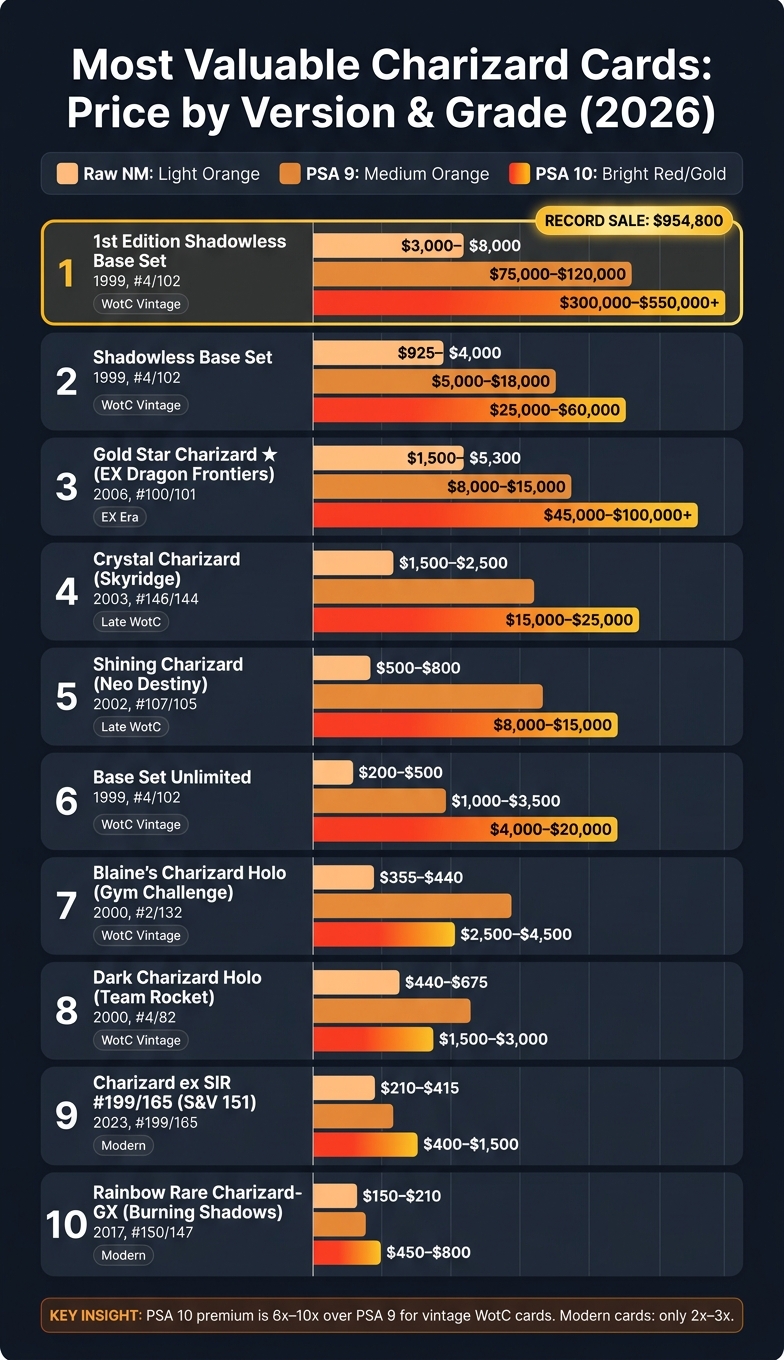
Most Valuable Charizard Cards: Price by Version & Grade (2026)
After the card-by-card ranking, this table makes the price gaps much easier to compare. It lines up all 10 Charizards by era, grade, and the main factor that tends to move value the most. That matters because some of these cards are easy to mix up at first glance, especially when the names sound almost the same.
The table below shows the exact version behind the price.
| Card | Set & Year | Defining Trait | Raw NM | PSA 8–9 | PSA 10 | Main Value Risk |
|---|---|---|---|---|---|---|
| 1st Edition Shadowless Holo | Base Set, 1999 | Edition 1 stamp + no drop shadow | $3,000–$8,000 | $30,000–$120,000 | $300,000–$550,000 | A single flaw can cut value sharply |
| Shadowless Holo | Base Set, 1999 | No stamp, no drop shadow | $925–$4,000 | $5,000–$18,000 | $25,000–$60,000 | Often confused with 1st Edition |
| Crystal Charizard Holo | Skyridge, 2003 | Crystal-type card | $1,500–$2,500 | Not common | $15,000–$25,000 | Surface scratches and edge whitening |
| Gold Star Charizard ★ | EX Dragon Frontiers, 2006 | Alternate-color artwork, star rarity | $1,500–$5,300 | $8,000–$15,000 | $25,000–$75,000 | Price swings |
| Shining Charizard | Neo Destiny, 2002 | Secret rare above set total (#107/105) | $500–$800 | Not common | $8,000–$15,000 | Silvering on holo edges |
| Blaine's Charizard Holo | Gym Challenge, 2000 | 1st Edition Gym Challenge card | $355–$440 | Not common | $2,500–$4,500 | Fighting Energy error variant drives most interest |
| Dark Charizard Holo | Team Rocket, 2000 | 1st Edition Team Rocket card | $440–$675 | Not common | $1,500–$3,000 | Smaller upside |
| Unlimited Holo | Base Set, 1999 | Drop shadow, bold HP text | $200–$500 | $1,000–$3,500 | $4,000–$20,000 | Often mistaken for Shadowless |
| Rainbow Rare Charizard-GX | Burning Shadows, 2017 | Rainbow foil treatment, GX mechanic | $150–$210 | Not common | $450–$800 | High PSA 10 population caps upside |
| Charizard ex SIR | Scarlet & Violet 151, 2023 | Special Illustration Rare #199/165 | $210–$415 | Not common | $400–$1,500 | High print runs and large PSA 10 supply cap upside |
Vintage WotC: rows 1–3 and 5–8; EX era: row 4; Modern: rows 9–10.
One pattern jumps off the page: vintage cards get the biggest PSA 10 jump. Modern cards can still sell well, but the gap from raw to gem mint is usually much smaller.
If you're buying or sending a card in for grading, pay close attention to the set, defining trait, and risk columns. That's the easiest way to tell apart lookalike Charizards before you spend money on the wrong version.
How to Tell Similar Charizards Apart Before You Buy or Sell
Before you buy or list a Charizard, check the print details closely. Small differences can change the price by a lot. This quick guide covers the Charizards people mix up most often.
The three Base Set versions all share the same card number: #4/102. So the number by itself won’t help. What matters are the shadow and the stamp. 1st Edition has no shadow and a stamp. Shadowless has no shadow and no stamp. Unlimited has a drop shadow.
| Feature | 1st Edition | Shadowless | Unlimited |
|---|---|---|---|
| 1st Edition Stamp | Yes | No | No |
| Art Box Shadow | No | No | Yes |
| Copyright Date | 1999 | 1999 | 1999–2000 |
If you see a card with a drop shadow and a 1st Edition stamp, treat that as a red flag. English 1st Edition Base Set Charizards are always shadowless, so that combo does not appear on a legitimate card.
Team Rocket Charizards follow a similar idea. The card number and finish tell you whether you’re looking at the holo or the much cheaper non-holo. Dark Charizard gets mixed up all the time because the names are the same: #4/82 is the holo, while #21/82 is the non-holo. Confusing those two can lead to a big price difference.
Some other Charizards don’t rely on print runs at all. Instead, you tell them apart by rarity marks and foil style. Here’s what to look for:
- Shining Charizard: the Pokémon itself is in holographic foil, while the background stays flat. Card number: #107/105
- Crystal Charizard: marked by the "Crystal Type" Poké-Body and a crystal-like appearance. Card number: H19/H32
- Gold Star Charizard: has a small gold star (★) next to the name and shows a black-colored Shiny Charizard. Card number: #100/101
- Rainbow Rare Charizard: has full-card rainbow foil and a number above the set total. Card number: 150/147
- Special Illustration Rare Charizard: uses full-bleed artwork with an etched texture. In 151, the card is #199/165
Conclusion
Charizard prices come down to three big things: icon status, limited supply, and how hard grading hits the card’s price. At the high end, one small jump in grade can lead to a massive jump in value. That’s why verification matters so much now. If you’re buying or selling, check sold comps and population data for the exact card and exact grade.
That said, most people aren’t holding trophy-level cards. They own mid-tier copies or cards with wear. And those cards still matter. If you have a Charizard, protect it with a sleeve and store it the right way. Small steps like that can make a big difference later. That’s also why careful storage and exact identification matter most.
Put simply: verify the version, judge the grade, and don’t assume the name alone tells you the value.
FAQs
How can I tell if my Charizard is 1st Edition, Shadowless, or Unlimited?
Check three visual details on a Base Set Charizard:
- 1st Edition: has the 1st Edition stamp on the left below the artwork and no drop shadow.
- Shadowless: has no 1st Edition stamp and no drop shadow.
- Unlimited: has no 1st Edition stamp and a drop shadow to the right of the artwork.
There’s also a date clue. Unlimited cards often show a 1999-2000 copyright date, while 1st Edition and Shadowless cards usually show only 1999.
Should I grade my Charizard before selling it?
It depends on the card’s condition and market value.
Consider grading if the card looks near mint or better, is worth more than $200 raw, or is a 1st Edition or Shadowless variant. If you plan to sell, grading can also help with buyer confidence and make the card easier to move.
Skip grading if the card has visible wear or is worth under $50 raw. Grading costs money and takes time, so it usually makes the most sense for cards that are likely to earn a grade of 8 or higher.
What signs help spot a fake Charizard?
Check the card’s light test, print pattern, feel, and small design details. Authentic cards usually have a black core that blocks light, a steady rosette print pattern, and a slight waxy feel. Fake cards often let light through, show splattered ink or flat color blocks, or feel too glossy, plastic-like, or oddly matte.
It also helps to inspect the 1st Edition stamp and shadow details. Blurry text, uneven spacing, or slight misalignment can be red flags.
For cards worth over $500, professional grading is the most reliable way to confirm authenticity.